


Supports mitochondrial function and metabolic processes to promote daily energy, focus and vitality.
- Supports cellular energy production
- Promotes healthy metabolic function
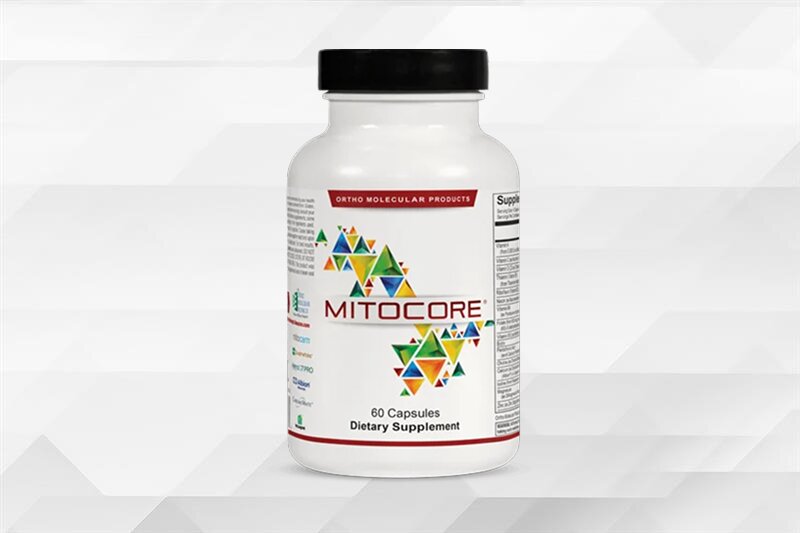
Supports heart, brain, joint, skin, and eye health while helping maintain a healthy inflammatory response.
- Supports cardiovascular health and blood sugar metabolism
- Helps maintain joint health and normal inflammatory balance

Promotes a balanced gut microbiome to support digestion, nutrient absorption, and immune function.
- Supports secretory IgA and gut immune health
- Promotes digestive comfort, bowel regularity, and nutrient absorption
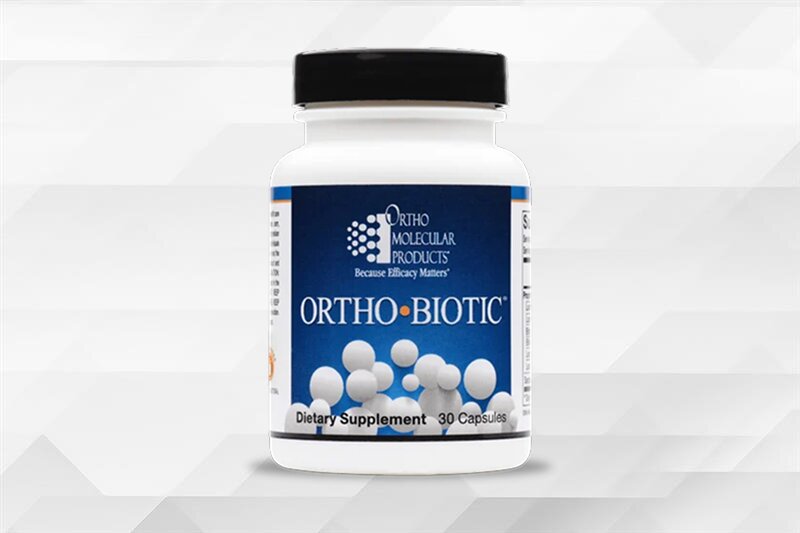
Supports mitochondrial function and metabolic processes to promote daily energy, focus and vitality.
- Supports cellular energy production
- Promotes healthy metabolic function
Supports heart, brain, joint, skin, and eye health while helping maintain a healthy inflammatory response.
- Supports cardiovascular health and blood sugar metabolism
- Helps maintain joint health and normal inflammatory balance
Promotes a balanced gut microbiome to support digestion, nutrient absorption, and immune function.
- Supports secretory IgA and gut immune health
- Promotes digestive comfort, bowel regularity, and nutrient absorption
Supports healthy appetite regulation and metabolic function by promoting the body's natural satiety signals.
- Stimulates natural GLP-1, CCK, and PYY release
- Enhances adherence to intermittent fasting and time-restricted eating
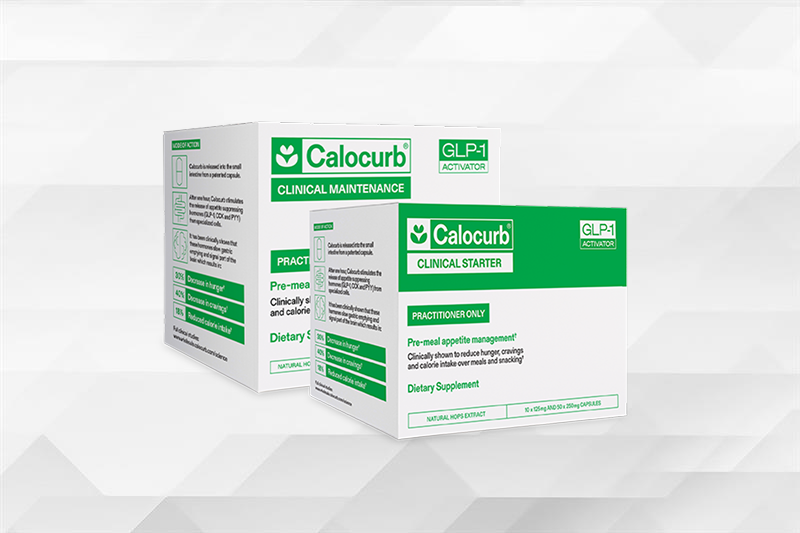
Promotes a balanced gut microbiome to support digestion, nutrient absorption, and immune function.
- Delivers 11 g of fiber to support digestive health
- Supports natural GLP-1 production to help manage appetite
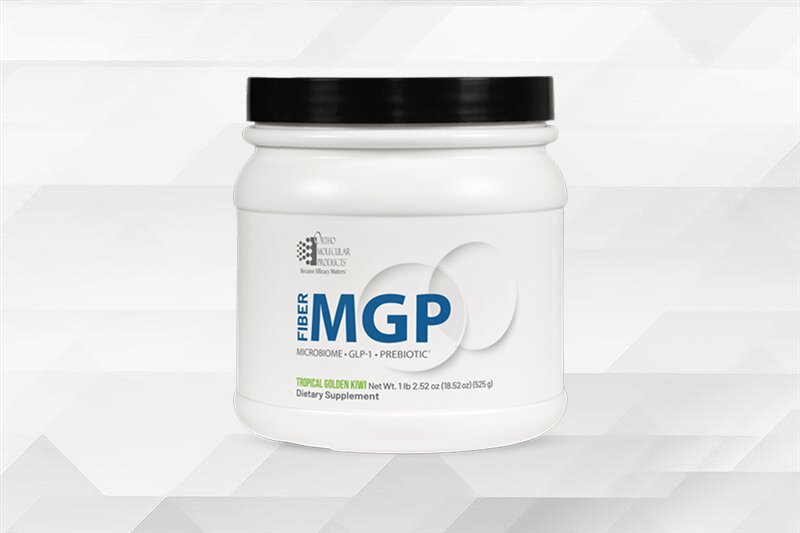
Supports healthy appetite regulation and metabolic function by promoting the body's natural satiety signals.
- Stimulates natural GLP-1, CCK, and PYY release
- Enhances adherence to intermittent fasting and time-restricted eating
Promotes a balanced gut microbiome to support digestion, nutrient absorption, and immune function.
- Delivers 11 g of fiber to support digestive health
- Supports natural GLP-1 production to help manage appetite
From evidence-based formulations and uncompromising quality standards to long-term partnerships with licensed health care practitioners, our purpose-driven approach shapes everything we do.

From evidence-based formulations and uncompromising quality standards to long-term partnerships with licensed health care practitioners, our purpose-driven approach shapes everything we do.
Our evidence-based supplements are available only through licensed health care professionals, reflecting our commitment to the medical community.

Our evidence-based supplements are available only through licensed health care professionals, reflecting our commitment to the medical community.
Our commitment to evidence-based formulation, rigorous quality standards, and practitioner partnership has earned recognition across the health care industry. These distinctions reflect our ongoing focus on scientific integrity, efficacy, and clinical trust.

Our commitment to evidence-based formulation, rigorous quality standards, and practitioner partnership has earned recognition across the health care industry. These distinctions reflect our ongoing focus on scientific integrity, efficacy, and clinical trust.
Access educational product videos, detailed product information sheets, and approved social media assets designed to support licensed health care professionals.

Access educational product videos, detailed product information sheets, and approved social media assets designed to support licensed health care professionals.
Find the right solution for ordering, patient care, and practice growth.
Find the right solution for ordering, patient care, and practice growth.
Tools and programs designed to help independent pharmacies drive front-end growth and long-term patient loyalty.

Tools and programs designed to help independent pharmacies drive front-end growth and long-term patient loyalty.
We partner exclusively with licensed health care professionals to deliver evidence-based supplements and clinical support.

We partner exclusively with licensed health care professionals to deliver evidence-based supplements and clinical support.

Choosing a Probiotic: A Practitioner Checklist
TL;DR: Practitioners choose a probiotic by matching the strain to the goal, then checking the formulation, the amount studied, and the maker's quality control and shelf life. In practice, that means five checks: strain names on the label, live counts guaranteed through expiration, a strain and amount matched to the goal, a format with clear storage needs, and a maker with strong quality control. At Ortho, the Ortho Biotic® Capsules label lists each bacterial strain by designation. Ortho Biotic® Capsules and Powder carry "Guaranteed potency at expiration."
If you searched for the best probiotic for gut health, the practical answer is a checklist, because the right probiotic depends on the strain and the goal. This page walks through that checklist, explains spore-based probiotics, and shows how our formulas line up. You can browse our probiotics here.
Why the strain comes first
Probiotics are live microorganisms that, in the right amounts, provide a health benefit. Their effects can be specific to certain strains, which is why federal guidance says recommendations need to be strain-specific. A large review of 228 trials found strong evidence that probiotic benefits are strain-specific. A probiotic's name has three parts: genus, species and a strain designation, such as Lactobacillus acidophilus La-14.
The checklist
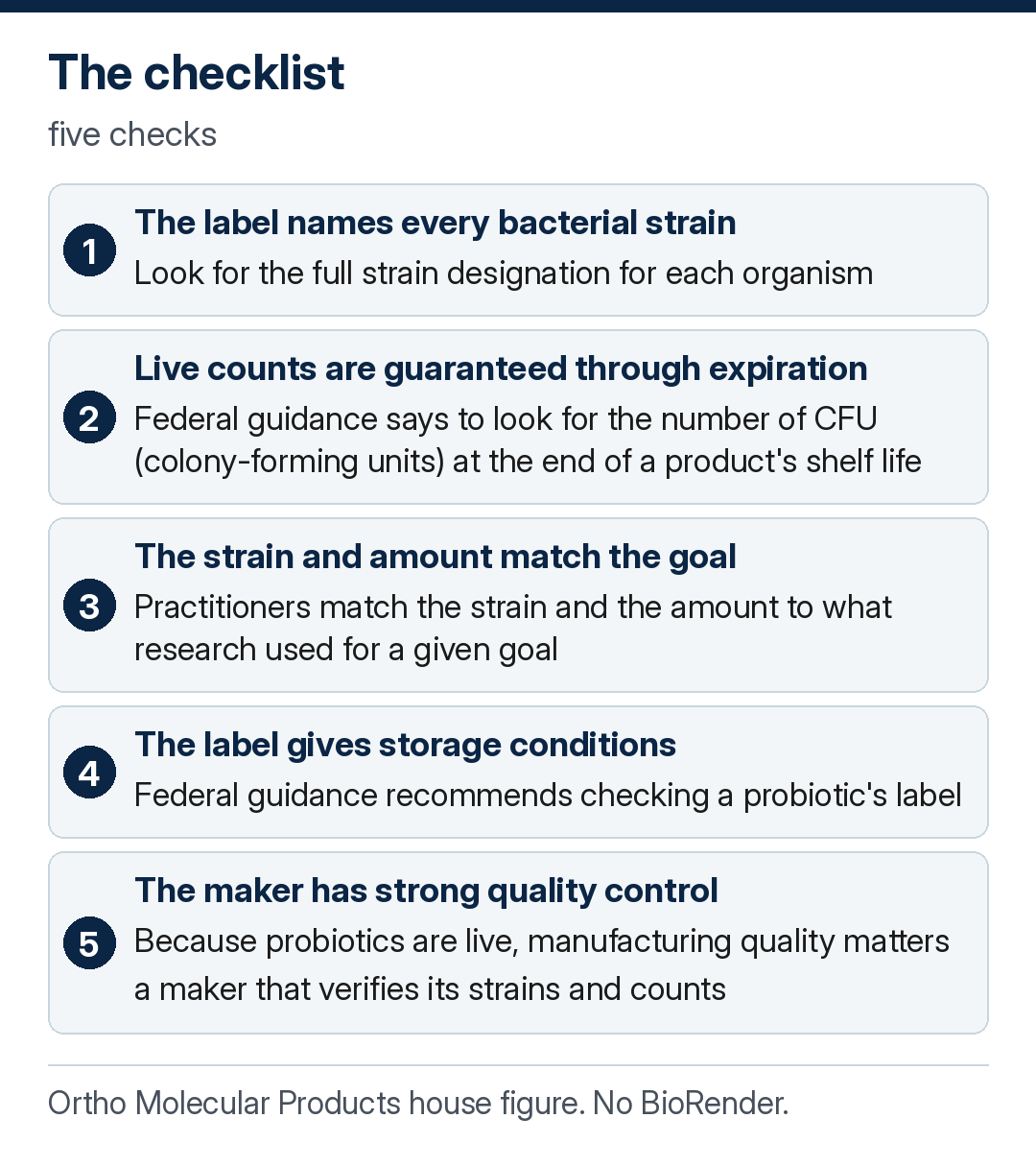
1. The label names every bacterial strain
Look for the full strain designation for each organism: the genus, the species and the letters and numbers after it, such as Lactobacillus acidophilus La-14.
At Ortho: Ortho Biotic® Capsules list six bacterial strains by designation, from Lactobacillus acidophilus (La-14) to Lactobacillus plantarum (Lp-115), and our spore formulas list strains such as Bacillus coagulans (MTCC5856).
2. Live counts are guaranteed through expiration
Probiotics are alive, so their count can fall over time. Federal guidance says to look for the number of CFU (colony-forming units) at the end of a product's shelf life, not when it was made.
At Ortho: Ortho Biotic® Capsules and Powder carry "Guaranteed potency at expiration."
3. The strain and amount match the goal
Practitioners match the strain and the amount to what research used for a given goal. Different strains are studied for different goals, such as regularity, gas and bloating, or microbiome balance.
4. The label gives storage conditions
Federal guidance recommends checking a probiotic's label for its storage conditions.
At Ortho: Ortho Biotic® Capsules and Powder need no refrigeration. Ortho Biotic® Capsules use BioShield® technology, our "integrated probiotic protection system designed to support organism stability, survivability, and targeted delivery."
5. The maker has strong quality control
Because probiotics are live, manufacturing quality matters. Federal sources note that there are reports of probiotic products containing microorganisms that are not on the label, so practitioners look for a maker that verifies its strains and counts.
At Ortho: the majority of Ortho products are made in-house, our lab tests raw materials, and we run stability testing on every lot. Some materials are tested outside our facility.
Matching strains to goals
Research on specific strains and species gives practitioners a starting point for each goal.
- Six Ortho probiotic formulas contain B. lactis Bl-04 or UABla-12. Compare the strain identifiers and clinical applications on the current product labels with your practitioner.
- Microbiome balance. Ortho Biotic® Capsules list "Helps Maintain Gastrointestinal Balance" and "Supports Digestion and Micronutrient Absorption."
Spore-based probiotics
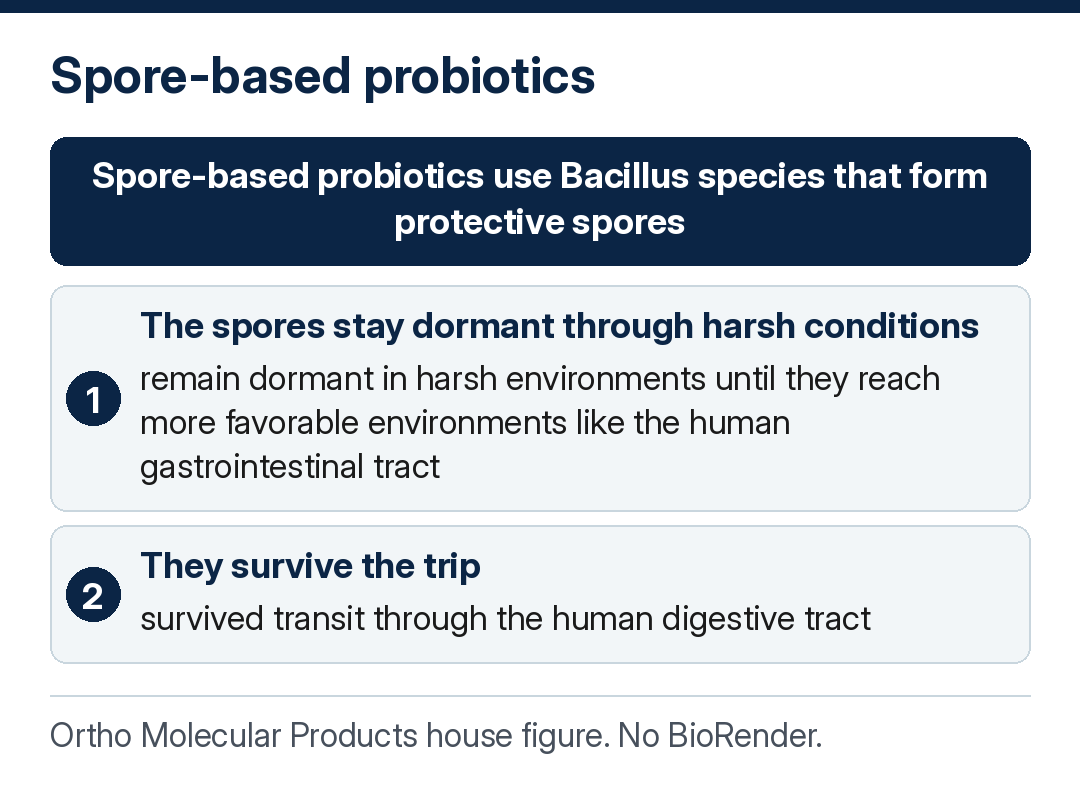
Spore-based probiotics use Bacillus species that form protective spores. On our Ortho Spore IG™ product page, we put it this way: Bacillus spores "remain dormant in harsh environments until they reach more favorable environments like the human gastrointestinal tract."
Research supports this format:
- They survive the trip. In a study, Bacillus clausii spores survived transit through the human digestive tract and stayed detectable for up to 12 days.
- Gas and bloating. In a placebo-controlled study of 70 adults, the spore-forming strain Bacillus coagulans MTCC5856, the same strain listed on Ortho Spore IG™ and Ortho Spore Complete, reduced gas and bloating scores over 4 weeks.
- Healthy microbiota. In 30 healthy adults, the same B. coagulans MTCC5856 strain was well tolerated and was linked with more of several beneficial gut bacteria over 28 days.
- After-meal balance. In a randomized study of healthy adults, a spore-based blend that included Bacillus subtilis HU58, a strain also listed on Ortho Spore Complete, was linked with lower after-meal endotoxin levels over 30 days.
Spore formulas are also used for gut barrier support.
Reading probiotic research
Probiotic research tests specific strains or blends for specific goals, so results belong to that strain and that goal. That is the reason this checklist starts with the strain, and why practitioners compare a formula's label with the strains that were studied.
Who should check first
Probiotics have a long record of safe use in healthy people, and side effects, when they happen, are usually minor. People with a severe illness or a weakened immune system face a higher risk of harmful effects, so they should talk with their practitioner first. If you take a medication, ask your practitioner before you add a probiotic, and send questions about an Ortho product and a medication to our customer service team at 1-800-332-2351 or contactus@ompimail.com.
What practitioners use
- Ortho Biotic® Capsules and Ortho Biotic® Powder. Six labeled bacterial strains plus S. boulardii, "Guaranteed potency at expiration," and no refrigeration required. They list "Helps Maintain Gastrointestinal Balance" and "Supports Bowel Regularity."
- Ortho Biotic® R. A different set of probiotic strains plus S. boulardii, for practitioners who prefer a rotational approach to probiotics. S. boulardii has its own research record.
- Ortho Biotic® 100 and Probiotic 225. Their product pages list "Maintains a Healthy Gut-Immune Barrier" (Ortho Biotic® 100) and "Accelerates the Proliferation of Healthy Intestinal Microflora" (Probiotic 225).
- Ortho Biotic® Women's. A formula "designed to maintain a healthy vaginal microflora and support urogenital health."
- Ortho Spore IG™. Spore-forming strains plus serum-derived bovine immunoglobulin (SBI). Its product page lists "Helps Maintain Normal Gastrointestinal Balance" and "Maintains GI Barrier Health and Integrity." (GI means gastrointestinal)
- Ortho Spore Complete. Five spore-forming strains in a formula "designed to maintain diversity and balance in the gut microbiota and support gastrointestinal health after SIBO." (small intestinal bacterial overgrowth) Its product page lists "Helps Gently Restore and Maintain Microbial Balance and Diversity."
Compare the full range on the Ortho Biotic® family page.
How to get Ortho products
Every Ortho product is available only through licensed practitioners.
- Patients: ask your practitioner whether they use Clinical Care Path™.
- Licensed practitioners: open a practitioner account. Practitioner pricing: log in.
- Product-fit or medication questions: contact our customer service team at 1-800-332-2351 or contactus@ompimail.com, 7am to 6pm CST.
Frequently asked questions
What should I look for in a probiotic? Look for strain names on the label, live counts guaranteed through expiration, a strain and amount matched to your goal, clear storage needs, and a maker with strong quality control.
What is a spore-based probiotic? A spore-based probiotic uses Bacillus species that form protective spores. The spores stay dormant through harsh conditions, and a study found B. clausii spores survived transit through the digestive tract.
Is a higher CFU count better? The right CFU count is the amount studied for that strain and goal, so practitioners match the strain and the dose to the research.
Do probiotics need to be refrigerated? It depends on the product, so check the label for storage conditions. Ortho Biotic® Capsules and Powder need no refrigeration.
Why do practitioners rotate probiotics? Some practitioners prefer a rotational approach to probiotics. Ortho Biotic® R offers a different set of probiotic strains for that purpose.
Next step
Practitioners: open an Ortho account. Patients: ask your practitioner which probiotic strain fits your goal.
These statements have not been evaluated by the Food and Drug Administration. These products are not intended to diagnose, treat, cure or prevent any disease.
Sources
- Sniffen JC, McFarland LV, Evans CT, Goldstein EJC. PLoS One 2018;13(12):e0209205. PMID 30586435. doi:10.1371/journal.pone.0209205
- NIH Office of Dietary Supplements. Probiotics: Fact Sheet for Health Professionals (updated March 25, 2025). https://ods.od.nih.gov/factsheets/Probiotics-HealthProfessional/
- Hill C, Guarner F, Reid G, et al. Nat Rev Gastroenterol Hepatol 2014;11(8):506-14. PMID 24912386. doi:10.1038/nrgastro.2014.66
- McFarland LV, Evans CT, Goldstein EJC. Front Med 2018;5:124. PMID 29868585. doi:10.3389/fmed.2018.00124
- NCCIH. Probiotics: Usefulness and Safety (last updated August 2019). https://www.nccih.nih.gov/health/probiotics-what-you-need-to-know
- van der Schoot A, Helander C, Whelan K, Dimidi E. Clin Nutr 2022;41(12):2759-77. PMID 36372047. doi:10.1016/j.clnu.2022.10.015
- Ringel-Kulka T, Palsson OS, Maier D, et al. J Clin Gastroenterol 2011;45(6):518-25. PMID 21436726. doi:10.1097/MCG.0b013e31820ca4d6
- Ghelardi E, Celandroni F, Salvetti S, et al. J Appl Microbiol 2015;119(2):552-9. PMID 25973914. doi:10.1111/jam.12848
- Majeed M, Nagabhushanam K, Paulose S, Arumugam S, Mundkur L. Medicine (Baltimore) 2023;102(9):e33109. PMID 36862903. doi:10.1097/MD.0000000000033109
- Majeed M, Nagabhushanam K, Mundkur L, et al. Medicine (Baltimore) 2023;102(20):e33751. PMID 37335737. doi:10.1097/MD.0000000000033751
- McFarlin BK, Henning AL, Bowman EM, Gary MA, Carbajal KM. World J Gastrointest Pathophysiol 2017;8(3):117-26. PMID 28868181. doi:10.4291/wjgp.v8.i3.117
- Ortho Molecular Products product pages: Ortho Biotic® Capsules, Powder, 100, Women's and R; Probiotic 225; Ortho Spore IG™; Ortho Spore Complete.


These statements have not been evaluated by the Food and Drug Administration. These products are not intended to diagnose, treat, cure or prevent any disease.
